 Abroad Job Media
Easy Guide to Japan Work Permit Visa: Jobs, Salary & Requirements
Dreaming of working in Japan? You’re not alone.
From its cutting-edge technology to its unique culture and clean cities, Japan has become one of the most attractive countries for people looking to work abroad. The good news? Japan is currently facing a labor shortage, which means more opportunities for foreign workers than ever before.
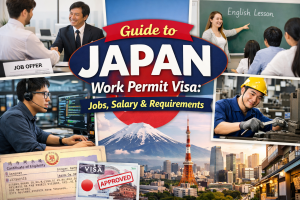
But before you pack your bags, there’s one important thing you need to understand — the Japan work permit visa.
In this guide, I’ll walk you through everything in a simple, easy-to-understand way: how the visa works, what jobs are available, how much you can earn, and what you need to qualify.
What is a Japan Work Permit Visa?
Let’s keep it simple.
Japan doesn’t have a “general” work permit like some other countries. Instead, it offers different types of work visas based on your job.
That means:
- You must have a job offer first
- Your visa is tied to your profession and employer
So unlike countries where you go first and find work later, Japan works the other way around.
Types of Work Visas in Japan
There are several visa types, but don’t worry—you don’t need to memorize all of them. Here are the main ones you should know:
1. Engineer / Specialist in Humanities / International Services
This is the most common visa for foreigners.
If you work in:
- IT
- Engineering
- Marketing
- Translation
This is likely your category.
2. Highly Skilled Professional Visa
This one is for experienced professionals.
It uses a points system based on:
- Education
- Salary
- Work experience
The big advantage? You can get permanent residency much faster.
3. Specified Skilled Worker (SSW)
Perfect if you don’t have a highly academic background.
Jobs include:
- Factory work
- Construction
- Agriculture
- Caregiving
This visa is becoming very popular because Japan urgently needs workers in these fields.
4. Other Visa Types
- Intra-company transfer (if your company sends you to Japan)
- Skilled labor (chefs, craftsmen)
- Business manager (if you want to start a company)
Basic Requirements for a Japan Work Visa
Now let’s talk about what you actually need.
1. A Job Offer (Most Important)
You cannot apply without this.
A Japanese company must hire you and sponsor your visa.
2. Education or Experience
Usually:
- A bachelor’s degree
OR - 10+ years of relevant work experience
3. Matching Skills
Your job must match your background.
For example, you can’t study history and apply for a software engineer role (unless you have experience).
4. Certificate of Eligibility (COE)
This is a key document.
- Applied by your employer in Japan
- Takes about 1–3 months
- Required before visa application
5. Documents
You’ll need:
- Passport
- Photos
- Job contract
- Educational certificates
6. Japanese Language (Optional but Helpful)
Not always required, but it helps a lot.
- JLPT N2 = great advantage
- JLPT N3/N4 = helpful for basic jobs
Step-by-Step Visa Process (Simple Version)
Here’s how it actually works in real life:
Step 1: Apply for Jobs
Use job websites or recruitment agencies.
Step 2: Get Hired
Once selected, your employer starts the process.
Step 3: Employer Applies for COE
This happens in Japan.
Step 4: Receive COE
It gets sent to you after approval.
Step 5: Apply for Visa
Submit documents to the Japanese Embassy.
Step 6: Fly to Japan ✈️
Once approved, you’re ready to go!
Best Jobs in Japan for Foreigners
Let’s be honest—some jobs are easier to get than others.
Here are the most popular options:
IT & Software Jobs
- Very high demand
- Good salaries
- Sometimes no Japanese required

English Teaching
One of the easiest ways to enter Japan.
- Requires a degree
- No experience needed in many cases
Healthcare & Caregiving
Japan has an aging population, so there’s huge demand.
Factory & Manufacturing Jobs
- Available under SSW visa
- Easier entry requirements
Hospitality & Tourism
Hotels, restaurants, customer service jobs are also open to foreigners.
Salary in Japan (What You Can Expect)
Let’s talk money
Here’s a rough idea of monthly salaries:
- IT jobs: ¥250,000 – ¥600,000
- English teachers: ¥200,000 – ¥300,000
- Factory workers: ¥180,000 – ¥300,000
- Skilled workers: ¥250,000 – ¥400,000
Beginners usually start lower, but salaries increase with experience.
Cost of Living in Japan
Before getting excited about salary, you should know the expenses too.
Monthly Costs:
- Rent: ¥50,000 – ¥120,000
- Food: ¥30,000 – ¥50,000
- Transport: ¥10,000 – ¥20,000
- Utilities: ¥10,000 – ¥15,000
Tokyo is expensive, but smaller cities are more affordable.
Benefits of Working in Japan
Why do so many people want to work here?
✔ Job Stability
Japan has strong labor laws and a stable economy.
✔ Career Growth
You can work with global companies and build international experience.
✔ Unique Lifestyle
Clean cities, safety, and rich culture.
✔ Permanent Residency Option
- Usually after 10 years
- Faster (1–3 years) for highly skilled workers
Challenges You Should Know
It’s not all perfect—here are some real challenges:
Language Barrier
English alone isn’t always enough.
Work Culture
- Long hours
- Strict hierarchy
Limited Job Flexibility
Your visa is tied to your job type.
Tips to Get a Job and Visa Faster
Want to improve your chances? Follow these:
✔ Learn Basic Japanese
Even beginner level helps a lot.
✔ Focus on High-Demand Skills
- IT
- Healthcare
- Engineering
✔ Apply Smartly
Use trusted websites and avoid fake agents.
✔ Use a Japanese Resume Format
A “Rirekisho” increases your chances.
Processing Time & Cost
Here’s what to expect:
- COE: 1–3 months
- Visa approval: 5–10 days
Cost is relatively low compared to other countries.
Can You Bring Your Family?
Yes, in many cases.
If you have a valid work visa, your spouse and children can join you under a dependent visa.
Can You Change Jobs?
Yes, but with conditions:
- Must stay in the same field
- Inform immigration
Is It Easy to Get a Japan Work Visa?
The honest answer?
Yes, if you meet the requirements.
Japan is actively hiring foreign workers right now, especially in:
- IT
- Healthcare
- Skilled labor
So if you have the right skills and a job offer, your chances are quite good.
Final Thoughts
Working in Japan can be a life-changing opportunity.
It’s not just about earning money—it’s about gaining international experience, exploring a new culture, and building a global career.
To keep it simple:
- Get a job offer first
- Choose the right visa
- Prepare your documents
- Learn some Japanese
- Target in-demand jobs
Follow these steps, and you’ll be well on your way to starting your career in Japan.