 Abroad Job Media
Complete Guide to Health Insurance in Italy (2026)
Italy is widely known for having one of the best healthcare systems in the world. Whether you are planning to move for work, study, or long-term residency, understanding how health insurance in Italy works is essential. This comprehensive SEO article will guide you through everything you need to know — from the public healthcare system to private insurance, costs, coverage, and tips for expats.
1. Overview of Health Insurance in Italy
Health insurance in Italy operates under a mixed system that combines:
- Public healthcare (government-funded)
- Private health insurance (optional but useful)
The backbone of the system is the Servizio Sanitario Nazionale (SSN) — Italy’s National Health Service. It provides universal healthcare coverage to all citizens and legal residents.
Unlike countries where insurance is mandatory through private providers, Italy’s system is largely funded through taxes, making healthcare either free or low-cost at the point of use.
2. The Italian Public Healthcare System (SSN)
What is SSN?
The Servizio Sanitario Nazionale (SSN) is Italy’s public healthcare system that ensures access to essential medical services for everyone.
Key Features
- Universal coverage for citizens and legal residents
- Funded through national and regional taxes
- Managed at the regional level
- Low or no cost for most services
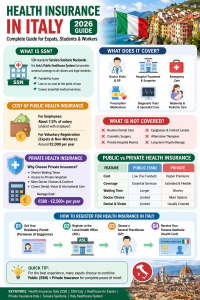
3. What Does Public Health Insurance Cover?
The SSN provides a wide range of essential healthcare services, including:
Covered Services
- General practitioner (GP) visits
- Hospital treatment and surgeries
- Emergency care
- Prescription medications (partially subsidized)
- Specialist consultations
- Diagnostic tests (MRI, CT scan, etc.)
- Maternity and pediatric care
4. What Is NOT Covered?
Although comprehensive, the SSN does not cover everything.
Limited or Excluded Services
- Routine dental care
- Cosmetic surgery
- Private hospital rooms
- Eyeglasses and contact lenses
- Alternative therapies
- Long-term psychotherapy
Because of these gaps, many people choose private insurance as a supplement.
5. Cost of Public Health Insurance in Italy
For Employees
- Contributions are automatically deducted from salary
- Around 7.5% of income (shared with employer)
For Voluntary Registration (Expats)
- Minimum annual fee: around €2,000 (2024+ rules)
Co-payments (Ticket System)
Even with public healthcare, some services require small fees:
- Specialist visits: €20–€50
- Diagnostic tests: €10–€100
- Medications: €5–€25
These co-payments keep the system affordable while maintaining quality.
6. Who Needs Health Insurance in Italy?
Health insurance is mandatory in Italy.
You need coverage if you are:
- A resident (EU or non-EU)
- A student
- A worker
- A retiree
- A long-term visa holder
You must either:
- Register with the SSN
- OR purchase private health insurance
Failure to do so may affect your visa or residency approval.
7. Private Health Insurance in Italy
Why Choose Private Insurance?
Even though public healthcare is strong, private insurance offers:
- Faster access to specialists
- Shorter waiting times
- Access to private hospitals
- More comfort and flexibility
Around 1 in 4 Italians use private insurance to cover gaps in the public system.
8. What Does Private Insurance Cover?
Private health insurance typically includes:
- Specialist consultations without long waiting
- Private hospital treatment
- Dental and vision care
- International coverage (for expats)
- Choice of doctors and facilities
However, some policies may exclude:
- Pre-existing conditions
- Routine checkups
- Maternity (depending on plan)
9. Cost of Private Health Insurance in Italy
Private insurance costs vary depending on:
- Age
- Coverage level
- Medical history
- Insurance provider
Average Costs:
- Basic plans: €580 – €900 per year
- Comprehensive plans: €1,000 – €2,500+ annually
For expats, monthly plans can start from around €50–€100.
10. Public vs Private Health Insurance (Comparison)
| Feature | Public (SSN) | Private Insurance |
|---|---|---|
| Cost | Low (tax-funded) | Higher premiums |
| Coverage | Essential services | Extended services |
| Waiting Time | Longer | Shorter |
| Doctor Choice | Limited | Flexible |
| Dental & Vision | Limited | Usually covered |
11. How to Register for Health Insurance in Italy
Step-by-Step Process
- Obtain residency permit (Permesso di Soggiorno)
- Register at local health office (ASL)
- Choose a general practitioner (GP)
- Receive your Tessera Sanitaria (Health Card)
Once registered, you can access healthcare services across Italy.
12. Health Insurance for Expats in Italy
Expats have different options depending on their status:
Workers
- Automatically registered in SSN
- Contributions deducted from salary
Students
- Can register voluntarily (low-cost plans available)
Non-EU Residents
- Must either:
- Join SSN (paid), or
- Buy private insurance
Short-term Visitors
- Must rely on:
- Travel insurance
- Private health coverage
13. Regional Differences in Healthcare
Italy’s healthcare system is decentralized, meaning quality varies by region.
Northern Italy
- Better hospitals
- Shorter waiting times
- Advanced technology
Southern Italy
- Longer waiting times
- Fewer specialists
This regional variation is an important factor when choosing where to live.
14. Pros and Cons of Health Insurance in Italy
Advantages
✔ Universal healthcare access
✔ Low cost compared to other countries
✔ High-quality medical professionals
✔ Strong emergency services
Disadvantages
✖ Long waiting times in public system
✖ Limited dental coverage
✖ Regional inequality
✖ Bureaucracy for expats
15. Tips for Choosing the Right Health Insurance
If you’re moving to Italy, follow these expert tips:
1. Combine Public + Private
Use SSN for essential care and private insurance for faster access.
2. Check Coverage Details
Always read what is included and excluded.
3. Compare Plans
Look at:
- Coverage limits
- Deductibles
- Network hospitals
4. Consider Your Needs
- Students: basic plans may be enough
- Families: comprehensive plans recommended
- Seniors: look for specialized coverage
16. Is Health Insurance in Italy Worth It?
Absolutely. Italy offers one of the most affordable and efficient healthcare systems globally.
- Public healthcare ensures basic protection
- Private insurance enhances comfort and speed
For most residents and expats, a combination of both provides the best experience.
17. Frequently Asked Questions (FAQs)
Is healthcare free in Italy?
Mostly yes. Public healthcare is funded through taxes, but some services require small co-payments.
Do foreigners get free healthcare?
Only if they are legal residents and registered with the SSN.
Is private insurance necessary?
Not mandatory for residents, but highly recommended.
How good is Italy’s healthcare system?
Italy ranks among the top countries for healthcare quality and life expectancy.
Conclusion
Health insurance in Italy is a well-balanced system combining universal public healthcare and flexible private options. The SSN ensures that everyone has access to essential medical services, while private insurance fills in the gaps for faster and more personalized care.
Whether you’re a student, worker, or expat, understanding how the system works can help you make smart decisions and avoid unexpected costs.